Can 300 tote bags really rival a day of advertising in Times Square?
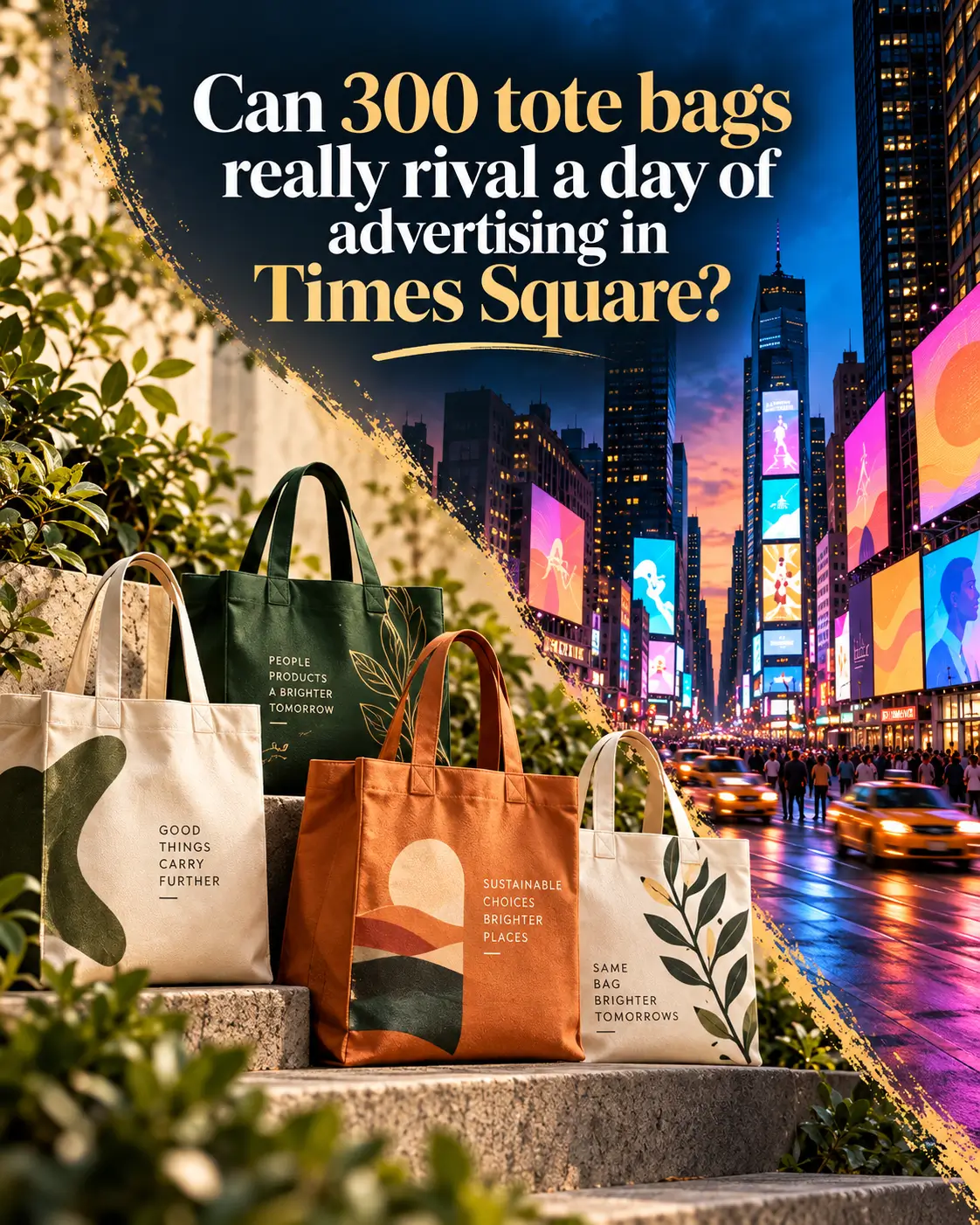
When businesses think about advertising, they usually think about social media, search, television or billboards. They are less likely to think about the bag a customer carries out of their shop.
But research into promotional products suggests that a well-designed branded tote bag can generate thousands of impressions during its lifetime - creating a potentially significant advertising asset long after the original purchase has been made.
Using industry advertising benchmarks, our analysis suggests that 300 branded tote bags could collectively generate around 1.47 million impressions over their lifetimes.
That is close to the 1.5 million daily advertising impressions associated with a Times Square billboard.
How many impressions does a tote bag generate?
The calculation is based on the Advertising Specialty Institute's 2026 Ad Impressions Study. The research estimates that the average promotional bag generates approximately 4,900 advertising impressions during its lifetime.
|
Number of branded bags |
Estimated lifetime impressions |
|
1 |
4,900 |
|
100 |
490,000 |
|
300 |
1,470,000 |
|
1,000 |
4,900,000 |
|
10,000 |
49,000,000 |
|
15,000 |
73,500,000 |
The same study found that 92% of consumers surveyed would use a promotional bag at least once a month, while 84% said they would keep one for at least a year.
That longevity is what makes reusable bags particularly interesting from an advertising perspective. A digital advert may disappear when the campaign ends. A billboard disappears when the booking finishes.
A branded bag can potentially continue carrying a company's name for months or even years.
300 tote bags vs Times Square
Times Square is one of the most recognisable advertising locations in the world. The Times Square Alliance cites approximately 1.5 million advertising impressions per day across the area.
So, in terms of raw impression numbers, approximately 300 promotional bags could accumulate almost as many impressions over their useful lives as Times Square generates in a day.
Times Square delivers its audience rapidly and in one highly concentrated location. A tote bag generates visibility gradually, as customers carry it to work, onto trains, around shopping centres, through town centres and into other businesses.
They are very different advertising channels, but that difference is part of what makes the comparison interesting.
Advertising value
The contrast becomes even more striking when cost is considered.
Creating 300 printed tote bags could cost approximately £500, depending on the bag specification, print method and order quantity.
Prime advertising space in Times Square can cost tens of thousands of dollars per day, with some high-profile placements reaching around $50,000 or more.
But it does highlight an often-overlooked part of the value of printed tote bags.
The cost isn't simply buying something for a customer to carry their purchase home in. If that customer continues using the bag, the business has also put a piece of branded media into circulation.
The difference between reusable and actually reused
This advertising value depends on one thing: people wanting to use the bag again. Calling something reusable doesn't guarantee that it will be reused.
That puts more importance on the design, material, print quality and overall feel of branded packaging. A basic carrier bag may make one journey. A bag that customers genuinely like could make dozens or hundreds.
That distinction applies across different forms of retail packaging. A well-designed printed paper bag can make a brand visible as a customer walks down the high street after a purchase. A reusable cotton tote can potentially extend that exposure much further if it becomes part of the customer's normal routine.
The principle is the same: good packaging should be something customers are happy to be seen carrying.
More brands are treating bags as part of their identity
There are signs that businesses increasingly recognise this opportunity. Examples of highly recognisable branded totes include those associated with Daunt Books, Shakespeare and Company, Trader Joe's and Erewhon.
Rather than functioning simply as shopping bags, these products have become associated with particular places, lifestyles and communities.
Some have even developed substantial secondary markets, with consumers willing to pay above the original retail price for specific designs.
It is another indication that the humble shopping bag can become something more valuable when people actively want to carry it.
Why bag design matters
If a business wants its bags to generate continued exposure, the objective cannot simply be to put a logo on the cheapest available product.
The bag needs to earn its place in the customer's routine.
That can mean thinking carefully about:
- Size and practicality
- Handle length
- Material and durability
- Print quality
- Colour
- Graphic design
- Brand visibility
- How the bag feels to carry
For retailers using branded paper bags, many of those same principles still apply. A distinctive, well-produced carrier can contribute to the perception of a brand at the point of purchase and make the business more visible outside the store.
For reusable totes, the opportunity extends further: the better the product, the greater the chance it will continue circulating.
Design a bag customers will want to carry
If you want your bags to keep generating value after the customer leaves your shop, quality and design matter.
At BagKraft, we help businesses create high-quality printed tote bags, branded paper bags and custom retail packaging that does more than carry a purchase. From choosing the right material and format to getting the print, proportions and finish right, the aim is to create a bag that represents your brand properly — and that customers are happy to be seen carrying.
Whether you need a small run of branded totes, premium printed paper bags or packaging for a larger retail campaign, speak to the BagKraft team about creating bags designed to be kept, reused and noticed.
Explore BagKraft’s custom bag options or contact us to discuss your next branded packaging project.
About the calculations
The Advertising Specialty Institute's 2026 Ad Impressions Study estimates approximately 4,900 lifetime impressions for a promotional bag.
BagKraft has used this figure as an industry benchmark for illustrative calculations. It should not be interpreted as measured reach for a specific BagKraft bag, customer or campaign.
The Times Square comparison uses the approximately 1.5 million daily advertising impressions cited for the Times Square advertising environment.
The comparison concerns raw impression counts only. It does not imply equivalent audience quality, attention, unique reach, advertising effectiveness, campaign duration or media value between promotional bags and Times Square advertising.