How to Recycle Common Household Items | BagKraft
How To Recycle Common Household Items
Sustainability is no longer just an option—it’s a necessity. As businesses and consumers become more environmentally conscious, the demand for eco-friendly packaging is growing. This article explores the latest innovations in sustainable packaging, the benefits they bring, and what the future holds for brands looking to make a greener impact.
What Household Items Can Be Recycled?
The first step towards becoming an eco-friendly household is understanding which household items can be recycled. While most people are familiar with the standard recycling groups, there are several other items you might not realise are also recyclable.
Below, we’ve broken down the household items you can and can’t recycle
Paper and Cardboard
The first step towards becoming an eco-friendly household is understanding which household items can be recycled. While most people are familiar with the standard recycling groups, there are several other items you might not realise are also recyclable.
Below, we’ve broken down the household items you can and can’t recycle
| Recyclable | Not recyclable |
| ✓ Clean delivery boxes and packaging | 𐄂 Oily, greasy or wet paper, such as takeaway containers and pizza boxes |
| ✓ Egg cartons, cereal boxes, and paper towel tubes’ | 𐄂 Foil-lined paper or cardboard |
| ✓ Newspapers and office paper | 𐄂 Wrapping paper with glitter or a glossy shine |
| ✓ Hardback and paperback books | 𐄂 Items with stickers or packing tape still attached |
Glass and Plastics
Standard glass jars, glass bottles, and rigid plastic containers are widely accepted by recycling facilities. This means most can go straight into your recycling bin at home. But, it’s important to closely look at the product packaging to make sure you separate components, such as lids and pumps, properly before recycling.
| Recyclable | Not recyclable |
| ✓ Milk cartons and plastic drink bottles | 𐄂 Containers with food residue or sticky residue |
| ✓ Food jars, such as jam jars and baby food jars | 𐄂 Plastic netting and film lids from fruit punnets |
| ✓ Washing detergent and dish soap bottles | 𐄂 Plastic pump dispensers |
| ✓ Health and beauty products, including shampoo, conditioner and toothpaste tubes | 𐄂 Mirrors, lightbulbs and window glass |
| ✓ Rigid clear plastic food trays | 𐄂 Drinking glasses |
Metal and aluminium packaging
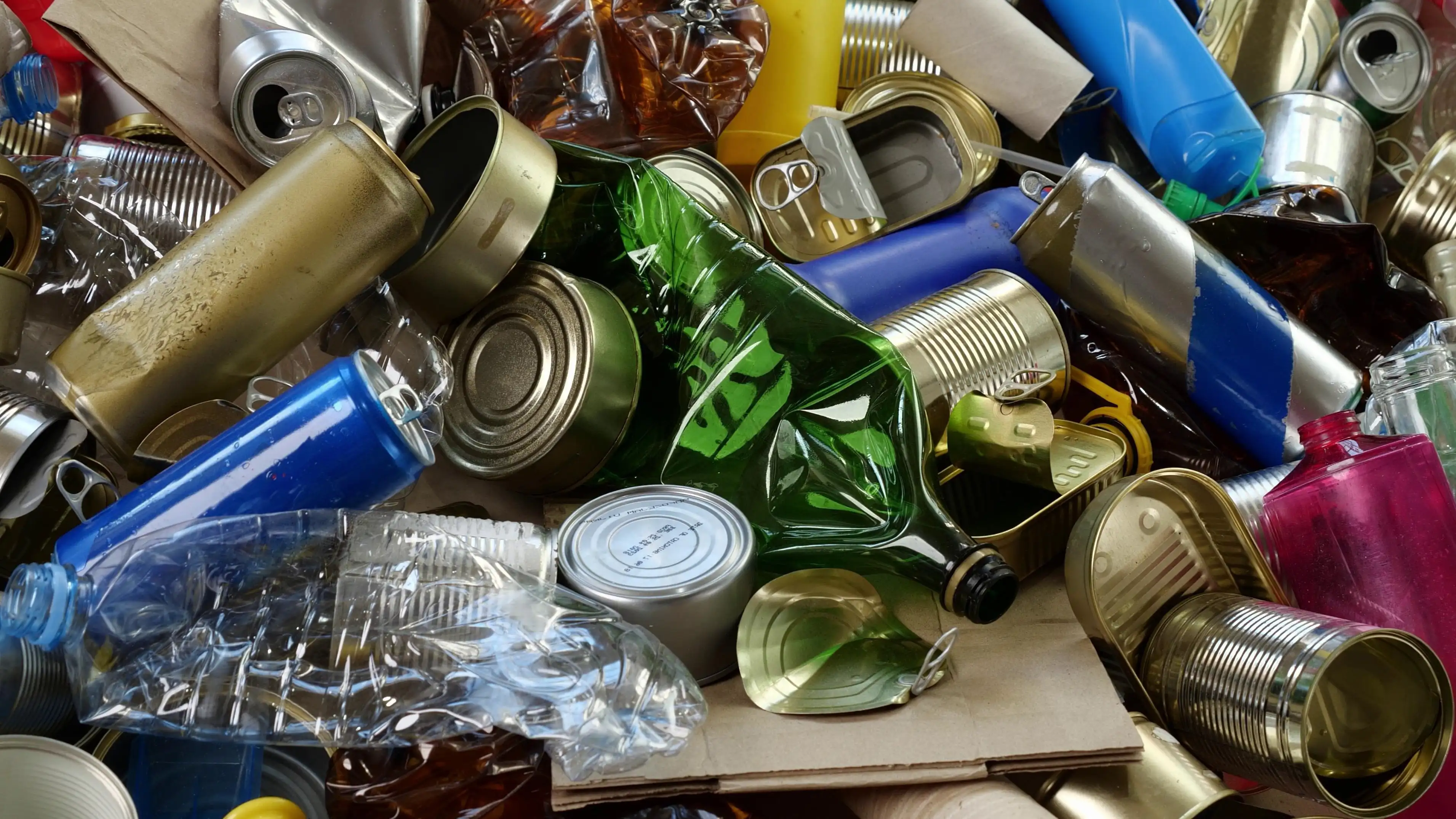
Metal is unique as it can be infinitely recycled to make new products without compromising on quality, making it an incredibly sustainable material.
| Recyclable | Not recyclable |
| ✓ Aluminium cans, such as soft drink and beer cans | 𐄂 Foil food trays or takeaway boxes with baked-on grease or food |
| ✓ Steel or tin cans | 𐄂 Cutlery, pots and pans |
| ✓ Clean and scrunched up foil and foil baking trays | 𐄂 Cans or aerosols with remaining products, such as paint |
| ✓ Empty aerosol cans, such as hairspray and deodorant | 𐄂 Laminated food pouches, including pet food and crisp packets |
| ✓ Metal tins and tubes |
Textiles and Clothes
Old clothing, curtains, and linens should never be tossed into the general waste. If you can’t donate them to a charity shop or shelter, or sell them online through a second-hand clothing site, many can be recycled. Even worn-out textiles can be recycled and turned into something new. Just take them to your nearest recycling centre or many retailers offer a take-back scheme where you can drop off your unwanted clothes.
| Recyclable | Not recyclable |
| ✓ Clean clothes, from jeans and coats to underwear and socks | 𐄂 Stained fabrics, such as with engine oil, paint or grease |
| ✓ Bedsheets, duvet covers, blankets and pillowcases | 𐄂 Wet, damp or mouldy clothing |
| ✓ Towels, tea towels and tablecloths | 𐄂 Soiled single-use rags |
| ✓ Accessories, such as paired shoes and handbags | 𐄂 Duvets |
| ✓ Fabric off-cuts | 𐄂 Carpets and rugs |
Waste Electrical and Electronic Equipment (WEEE)
While electronic items and appliances can be recycled, they cannot go in your standard recycling bin at home. They must be taken to a proper WEEE facility for safe recycling and repurposing. These include:
- Small appliances, such as kettles, toasters, microwaves, electronic toothbrushes and heat styling hair tools
- Large appliances, including fridges, freezers, washing and dryer machines, air conditioning units
- Gaming consoles, laptops, tablets and phones
- TVs, speakers and monitors
- Hoovers and power tools
- Loose cables and chargers
- Batteries and LED lightbulbs
Where to Recycle Household Items in the UK
Once you’ve sorted and cleaned your items, the next step is to find out whether you can simply put them into your recycling council bin or not.
- Local council bins: This may vary by region, but typically paper, cardboard, aluminium tins and cans, and plastic bottles can go into your recycling bin at home.
- Recycling centres: Bulkier items, clothes and textiles, and electrical goods need to be recycled at specialised facilities. You can take them to your local recycling centre, which you can easily locate online.
- Supermarket collection points: Most major UK supermarkets have collection hubs in-store for simple drop offs, especially for items like crisp packets, batteries, health and beauty products, and plastic bags
Local Action for Global Outcomes
Transitioning to a more sustainable lifestyle doesn’t happen overnight. But, making small, informed decisions in your everyday life can help create lasting positive environmental impacts. By accurately sorting, cleaning and disposing of your waste, you can confidently reduce your landfill contribution and help your old items find a new, second life.
Conclusion
Recycling common household items doesn’t need to feel complicated. By understanding what can go in your home recycling bin, what needs to be taken to a specialist recycling point, and what should be kept out altogether, you can make more responsible choices every day. Small actions, such as rinsing containers, separating materials and using supermarket or council recycling schemes, all help reduce landfill waste and give unwanted items a second life.
The more informed we are about recycling, the easier it becomes to build better habits at home. With a little care and consistency, every household can play a part in creating a cleaner, more sustainable future.